Electrostatic Force
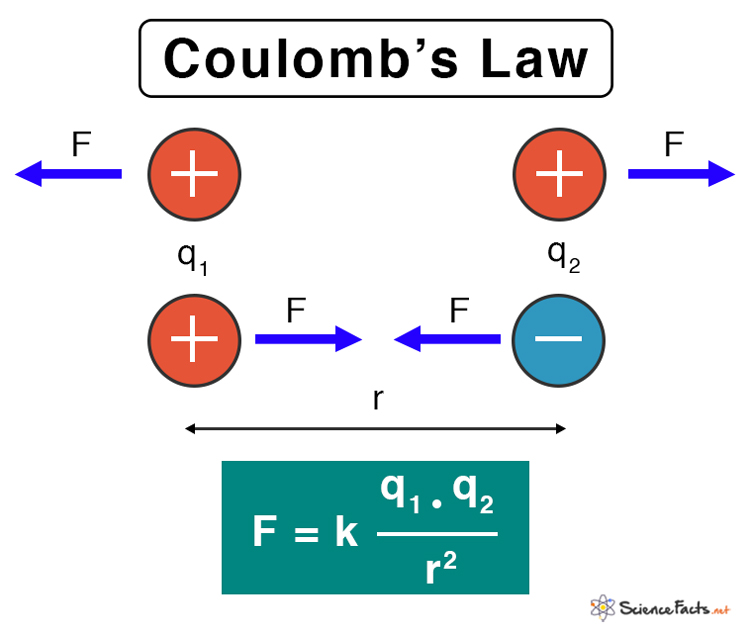
Electrostatic force is the force of attraction or repulsion between two charged objects. It is directly proportional to the product of the charges and inversely proportional to the square of the distance between them. The formula for the force between two point charges q1 and q2 separated by a distance r is given by F = k(q1q2)/r^2, where k is the Coulomb constant.
Coulomb's Law
Coulomb's law states that the electrostatic force between two point charges is directly proportional to the product of their charges and inversely proportional to the square of the distance between them. The mathematical formula for Coulomb's law is F = k(q1q2)/r^2, where F is the force, q1 and q2 are the charges, r is the distance between the charges, and k is the Coulomb constant.
Electric Field Intensity
The electric field intensity is the force per unit charge experienced by a small test charge placed at a point in space. It is a vector quantity, and its direction is the direction of the force experienced by a positive test charge. The electric field intensity is given by the formula E = F/q, where F is the force on the test charge, and q is the magnitude of the test charge.
Electric Field Lines
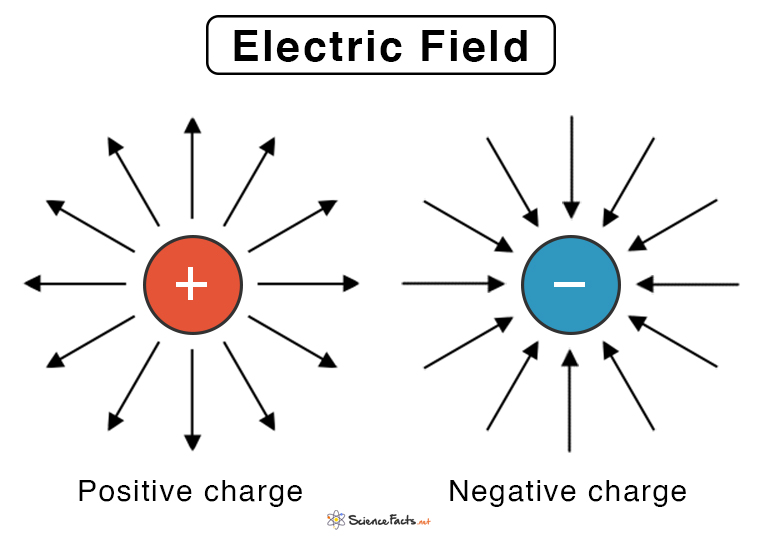
Electric field lines are imaginary lines that represent the direction and strength of the electric field around a charged object. The lines originate from positive charges and terminate at negative charges. The density of the lines indicates the strength of the electric field, and the closer the lines are to each other, the stronger the field.
Field Intensity of a Point Due to a Point Charge
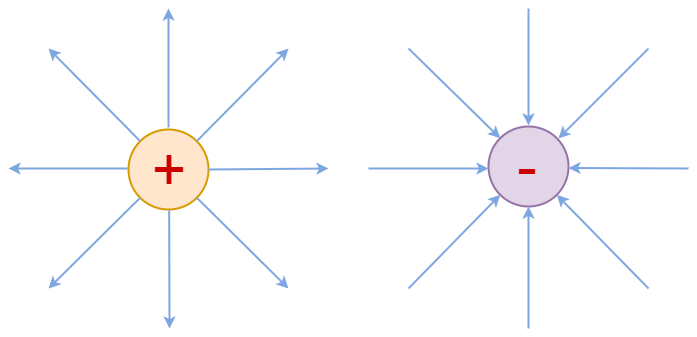
The electric field intensity at a point due to a point charge is given by the formula E = kq/r^2, where k is the Coulomb constant, q is the charge, and r is the distance between the point charge and the point where the field is measured. The direction of the field is radially outward from a positive charge and radially inward towards a negative charge.
Electric Field Lines Around a Point Charge
The electric field lines around a point charge are radially outward for a positive charge and radially inward for a negative charge. The density of the lines indicates the strength of the electric field, and the field lines get closer as the distance from the charge decreases.
Electric Field Lines Around Two Point Charges
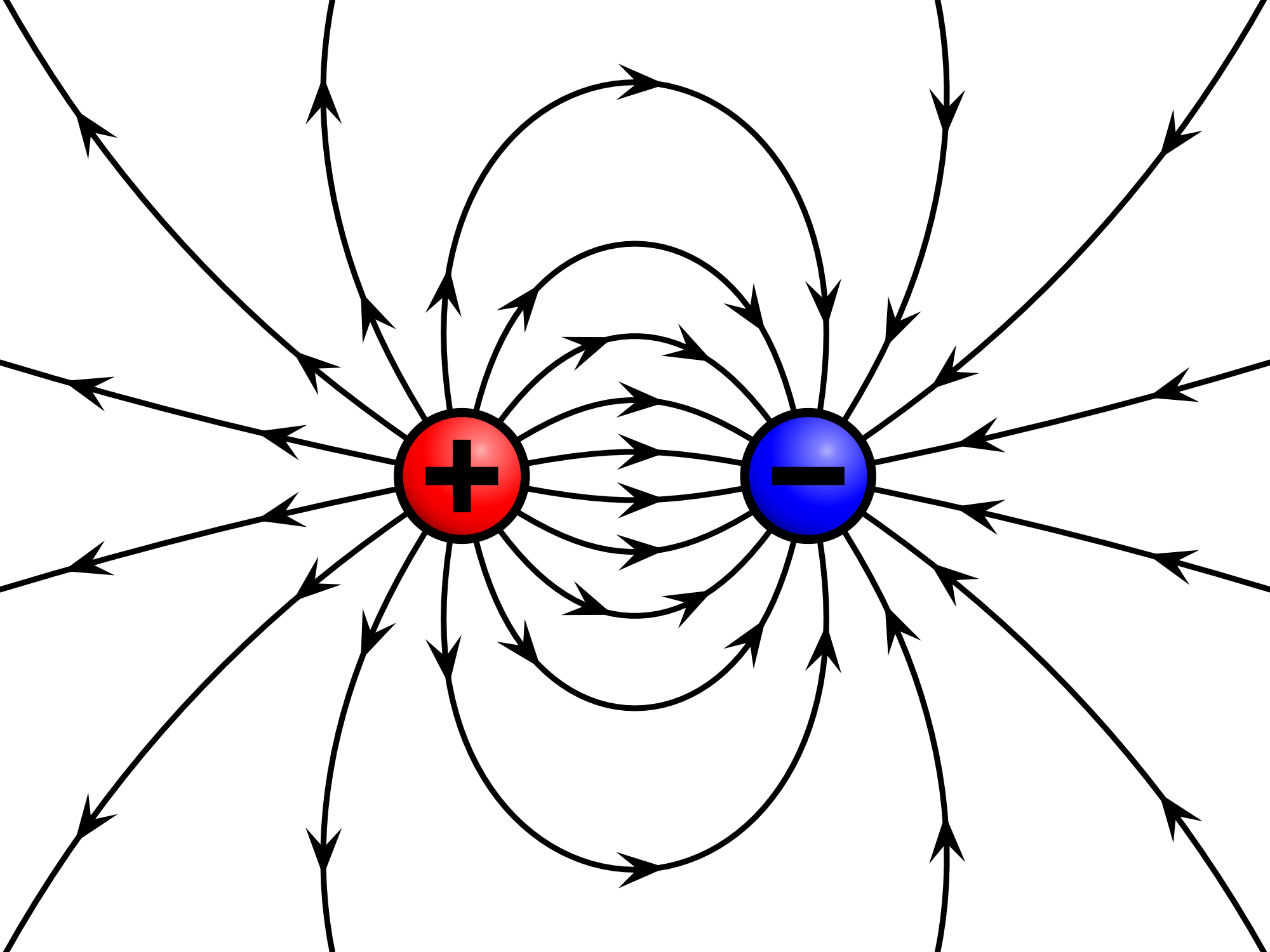
The electric field lines around two point charges can be drawn by superimposing the electric field lines due to each individual charge. The lines from a positive charge originate from the charge, while the lines from a negative charge terminate at the charge.
Electric Field Between Two Charged Parallel Plates
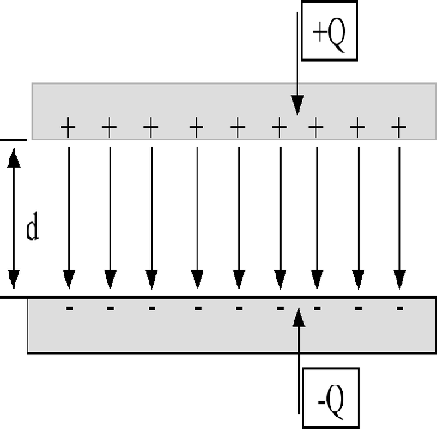
The electric field between two charged parallel plates is uniform and directed from the positive plate towards the negative plate. The magnitude of the electric field is given by E = V/d, where V is the potential difference between the plates and d is the distance between them.
Graphical Representation of the Variation of Field Intensity
The graphical representation of the variation of field intensity with distance is a hyperbola for both gravitational and electric fields. The field intensity decreases as the distance increases, and the rate of decrease is determined by the inverse square law. The field lines become denser as the strength of the field increases, and they become closer together as the distance decreases.
